Senior Leaders Are Getting This Decision Wrong 82% of the Time
July 8, 2026
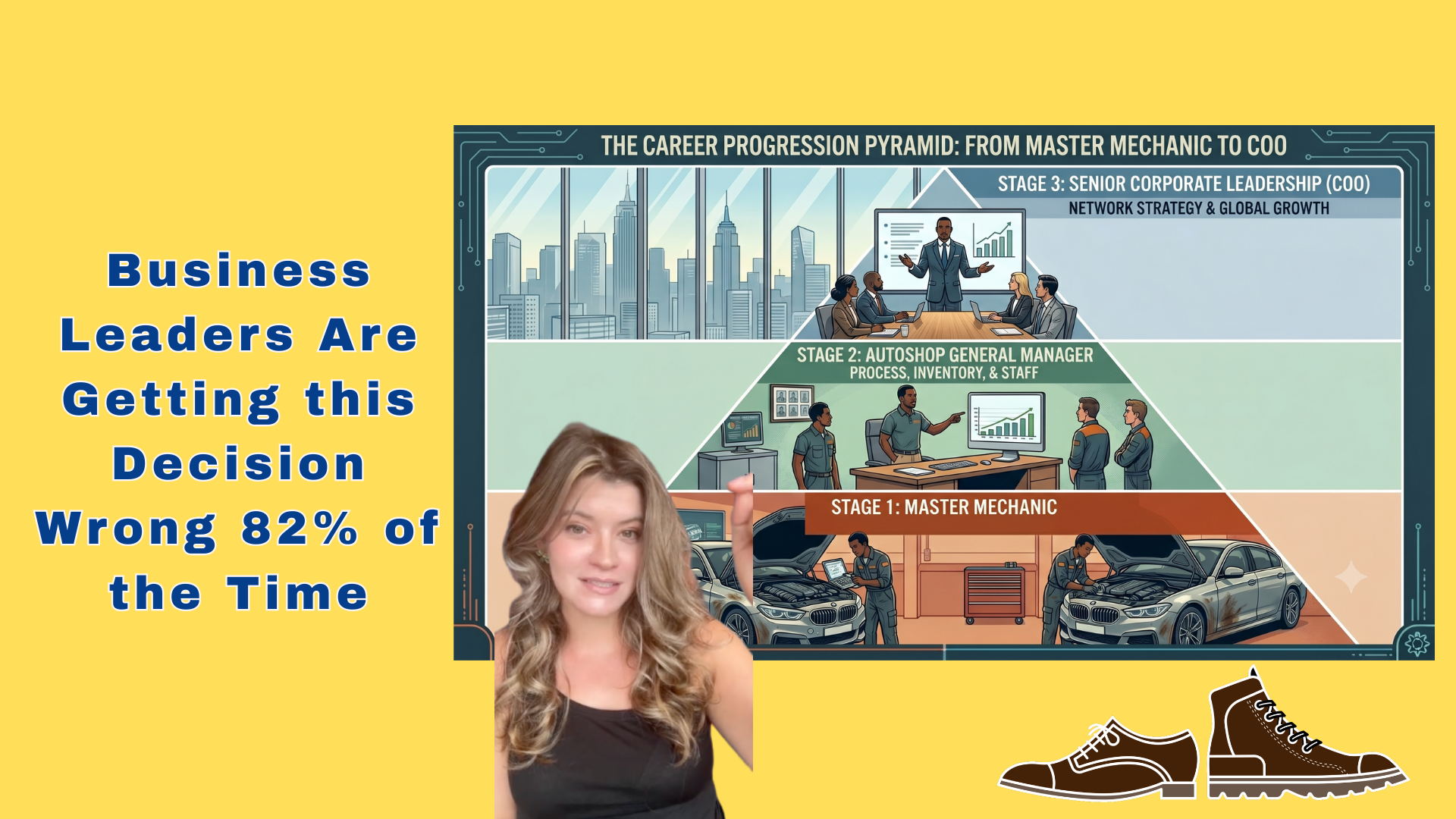
Gallup found that when organizations decide who to promote into a leadership role, they pick the wrong person 82% of the time. Not because good candidates don't exist. Because most organizations are evaluating for the wrong thing entirely — and the wrong thing has a name, even though almost nobody uses it. Gallup is absolutely correct, but let me let you in on the secret they don't have yet. The shift from a technical role to leadership is already a skill shift that is too often judged with biases and charisma instead of actual soft skills. And this is exacerbated by class cultural differences, especially in the tech, manufacturing, healthcare, and retail industries. Allow me to share some examples.
My first-ever presentation on this work was to a room of engineers from West Asia. The engineering school at my alma mater invited me — not because those engineers lacked technical skill, but because the school already understood that competence alone wouldn't carry them. They were about to work in the United States, and crossing into a new professional culture takes more than being good at the job.
And this isn't unusual. When a cultural gap crosses a national border, we already know how to talk about it. We call it a cultural difference. We build a bridge for it. When a German colleague is blunt with an American one, we call it a cross-cultural communication challenge, and we coach both sides toward each other.
Move that same gap inside one country's borders, and the grace disappears. A working-class professional who's direct in a middle-class corporate environment doesn't get called culturally different. He gets called unprofessional. Someone who takes a question literally instead of reading between the lines doesn't get a different processing style. He gets called blunt, or not polished.
This is the promotion pipeline problem, and most intercultural training never gets near it, because it stops at the border. As you move up a career ladder inside a single country, the rules change too, and there's a class culture reason behind that. We just don't name it as culture. We name it as character, even when it costs organizations millions of dollars in poor leadership and failed promotions.
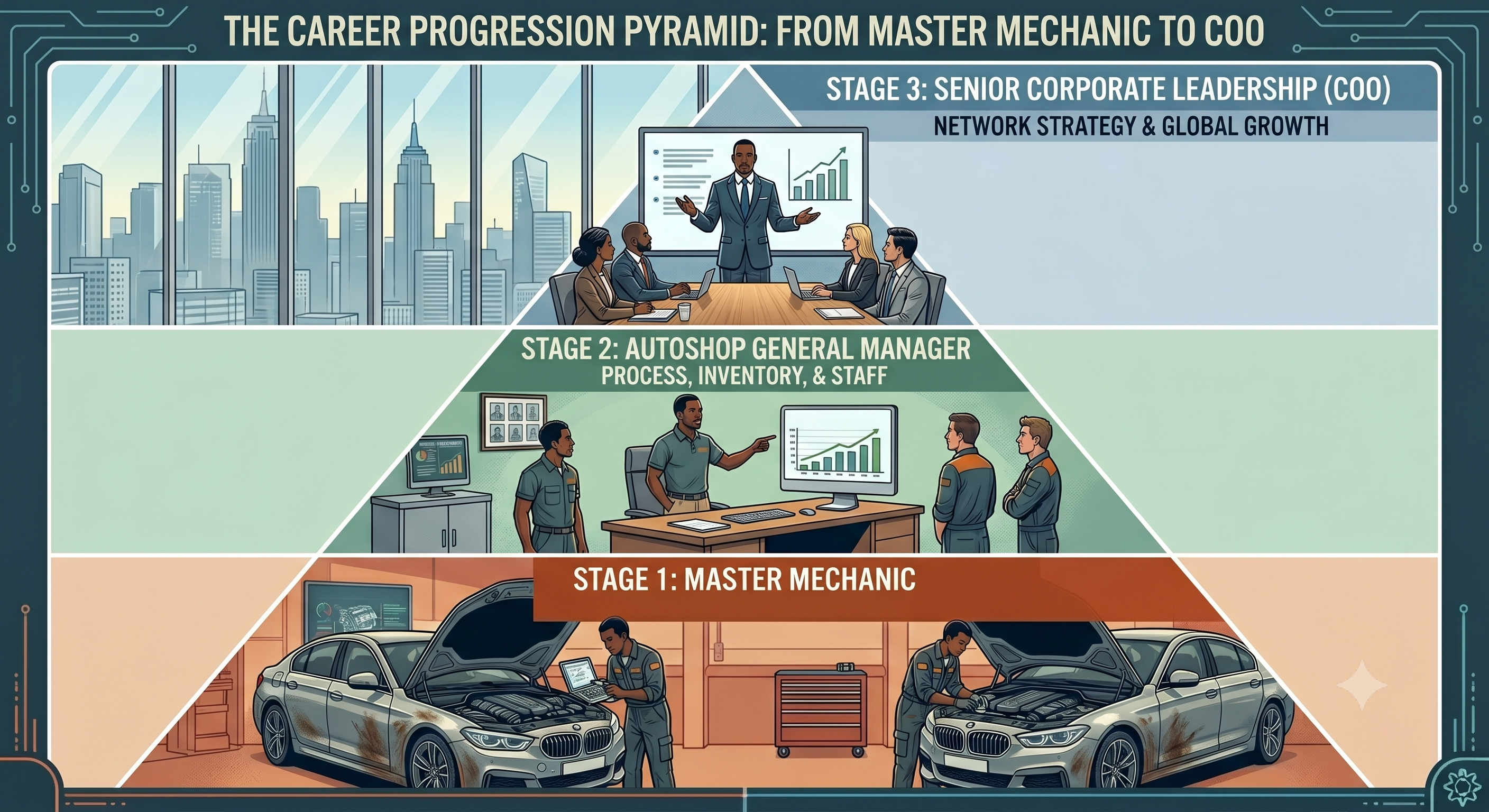
You see the plainest version of this with a mechanic. Promote your best one to run the shop, and three months later customers are saying he's harsh. Difficult. Not "professional." Nobody retrained him — he's exactly as skilled as the day you promoted him. What changed is the rules, and nobody told him that.
The Class Culture Promotion Pipeline Problem
Organizations consistently reward this skill set — confidence without rehearsing it, networking that looks "natural," advocating for yourself without it feeling like bragging — and call it competence. It isn't. It's a class-coded skill that was taught early, in some homes and not others. Calling it instinct instead of a skill is exactly what keeps it unteachable.
None of this is news on its own — everyone already knows there's a real jump from doing technical work to leading the people who do it. What doesn't get acknowledged is that class background makes that jump harder for some people than others, and that the people it filters out are often exactly the people an organization can least afford to lose.
I wrote about this in my book using an auto shop as the example: I want my mechanic recommendation from someone who's actually worked on a car, not someone who only has an MBA. If they have both, even better. But when this gap goes unaddressed, organizations don't end up with both. They end up promoting the most polished and losing the most competent, because the people who understand the work best are often the ones least equipped, by background, to perform the unwritten rules that get noticed.
When leadership becomes disconnected from the people doing the technical work, an organization loses its own early-warning system. The people closest to the product, the process, or the customer are also the people most likely to see a real problem coming — and if your promotion pipeline only ever advances the people who already sound like leadership, you're not just narrowing who's in the room. You're narrowing what kind of risk gets noticed before it becomes expensive.
That's the actual case for building a real promotion pipeline for people who didn't grow up speaking the house style, instead of quietly refilling leadership with the same kind of professional, generation after generation. Not because MBAs don't belong in the room. They do. It's that a room that only ever has MBAs in it has already lost something it doesn't know it's missing.
The Boeing Cautionary Tale
Boeing is the cautionary tale at scale. After merging with McDonnell Douglas in 1997, Boeing's leadership shifted from an engineering-led culture to a finance-led one, and moved headquarters away from Seattle, where the planes were actually built. The CEO who drove that shift said the explicit goal was to run Boeing "like a business rather than a great engineering firm." That cultural shift is now widely cited as a contributing factor in the 737 MAX disasters that killed 346 people. That's not a metaphor for what happens when an organization stops valuing the people who understand the work. That's the literal version of it.
Gallup's own research on great managers names the smaller-scale version of the same problem, without meaning to. One of the five traits Gallup found separates great managers from the rest is that they make decisions based on productivity, not politics. What gets labeled "executive presence" or "natural confidence" is exactly the politics Gallup is warning against — it's just invisible, because nobody's named it as politics. You can't actually separate a productivity decision from a politics decision until someone names which is which. That's what addressing unwritten rules directly does. It's not a soft skill on top of good management. It's the thing that makes good management possible to see in the first place.
The Translation Gap Nobody's Trained For
That gap doesn't stay at the individual level. It becomes a hidden tax on every middle manager who didn't grow up speaking the house style — but underneath that, there's a more basic problem most organizations never name at all. Managers are supposed to translate strategy down to their team, and translate ground truth back up to leadership.
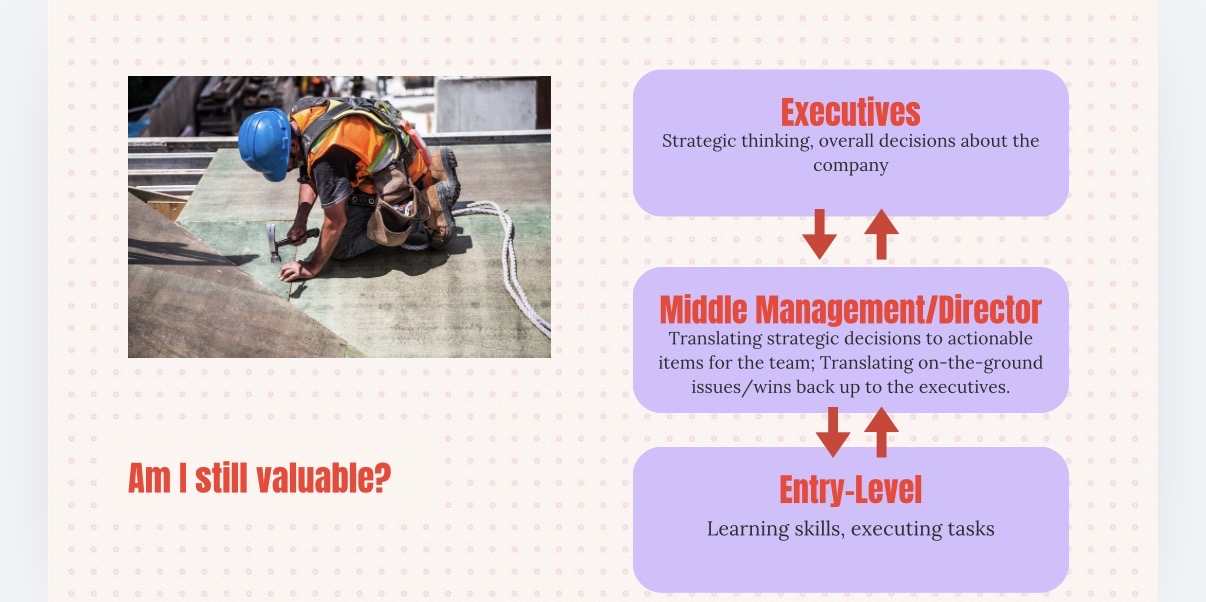
In practice, that translation usually doesn't happen, and it's part of why Gallup's number is so high: when you ask managers why they actually got the job, most point to success in their old role, or tenure — not anyone ever evaluating whether they could do either direction of this job. It gets treated as something you should just intuitively know how to do once you have the title. That's the actual job of effective management, and it's the thing I teach: how to translate deliberately, in both directions, instead of hoping it happens on its own.
I've seen this most clearly in industries going through a technical-to-leadership shift — retail, manufacturing, tech, healthcare. It's not only a blue-collar story. It happens just as often to first-generation professionals in white-collar technical fields, because this skill set was never taught in school, never discussed openly, and quietly assumed to be normal by the decision-makers above them. So those decision-makers keep getting the call wrong, the same way Gallup's data says they do 82% of the time, and everyone involved calls it a performance problem instead of a translation gap.
A Client Story
I watched this play out recently with an engineer I coach — a first-generation professional, not someone who came up on a factory floor. He'd been excellent at his old role, then moved into a more visible position and was surprised to receive negative performance feedback for "lack of initiative." He couldn't make sense of it. He was working 11-hour days.
I told him, "Congratulations, you've started a career transition!" You hit a point on the ladder where it stops being about the work and starts being about the relationships, and they're testing whether you can make that shift — not because the engineering ever stopped mattering, but because that's not what's being evaluated anymore. We started working on the skill set he's actually being evaluated on, but nobody told him.
He'd actually lived a version of this gap before, crossing a real border. On an internship in Germany, he gave the bottom-line-up-front answer Americans expect, and his German colleagues were offended — they wanted to know how he'd gotten there, not just the conclusion. That's a cultural difference in communication and rewards. He's having to switch again, but now within his own country. So everybody assumed he knew the new rules.
What This Means for Your Organization
Most of what gets filed under "character" is actually a problem nobody's ever named. I help people name it. I provide frameworks for middle managers/directors to deliver the two-way communication needed to perform their jobs. Because this really is a big deal. One-on-one coaching is what the proactive candidates in unsupportive environments are doing. But if you're a business owner, chances are this is a wider issue. And in that case, I recommend getting your managers in the same room with me, so they can learn the translation frameworks together. That way, they know what your expectations are and they know you support them in developing it.
Most managers leave this workshop feeling relieved and having an action plan. Most people want to do great jobs, and middle managers bear the brunt of burnout, responsibility, and low decision-making power. Strengthen this overlooked, high-leverage layer of your organization.
Seeing this pattern in your own promotion pipeline? Take the 2-minute quiz → to see where the gap is, or book 20 minutes → to talk through what a workshop for your managers could look like.
Navigating this yourself, mid-transition? Book a single session → to build your specific translation plan.