
Coaching Module 2 Overview: Building Influence Without Being Manipulative
July 31, 2026
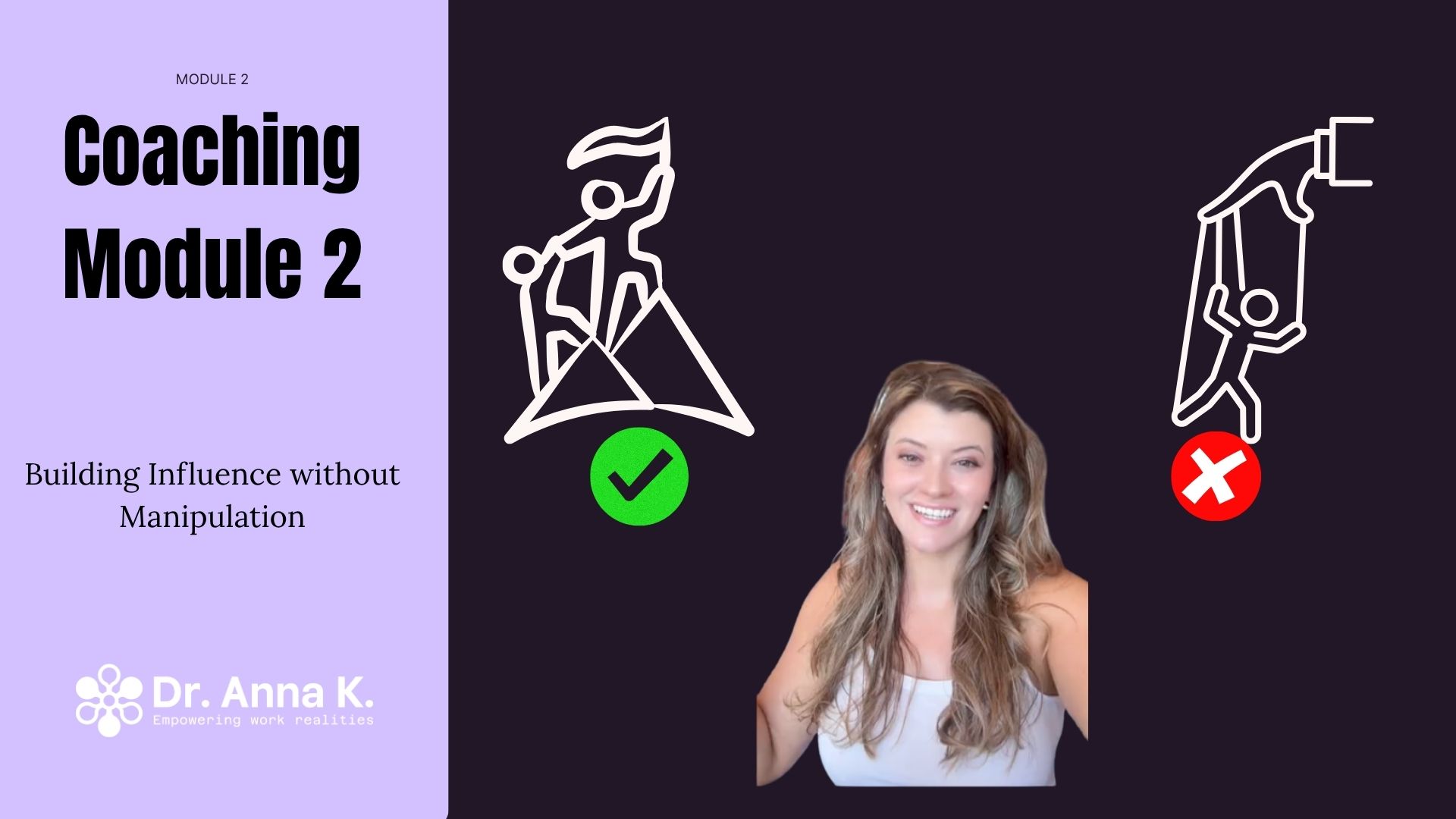
Module 2 Overview
Is it manipulative to tell people what they want to hear, or is that acknowledging their needs?
Why This Matters
Have you ever felt guilty about adapting your message to different audiences? Like there's something dishonest about telling people what they want to hear?
If you grew up working-class, you might have learned that honesty means being blunt. That good ideas should speak for themselves. That adapting your message is manipulative.
But here's the truth: Telling people what they want to hear isn't manipulation—it's respect.
When you pitch a cost-saving idea to Finance by leading with ROI, you're not lying—you're respecting that they care about numbers. When you frame the same idea to HR as "reducing burnout," you're not being fake—you're acknowledging that they care about people. When you present it to Operations as "streamlining processes," you're not manipulating—you're speaking their language.
The idea is the same. You're just acknowledging that different people have different priorities.
Here's what happens when you don't learn this: You present brilliant ideas the same way to everyone. Finance doesn't hear the cost benefits. HR doesn't see the people impact. Operations misses the efficiency gains. Your idea dies—not because it was bad, but because you insisted everyone should care about the same things you care about.
Meanwhile, someone else takes your exact same idea, packages it strategically for each stakeholder, and gets full credit. You get labeled "not ready for leadership" or "doesn't understand the business."
And here's what really matters: Without influence, you can't create change.
You can't:
-
Get your project funded
-
Protect your team from bad decisions
-
Advocate for better policies
-
Push back on harmful initiatives
-
Build coalitions for systemic change
-
Advance ideas that actually help people
Strategic communication isn't about climbing the ladder for yourself. It's about getting enough influence to actually make things better.
Think about every positive change you've ever seen in a workplace:
-
Someone had to build a coalition to support it
-
Someone had to translate the idea for different stakeholders
-
Someone had to navigate politics to get buy-in
-
Someone had to tell Finance what they wanted to hear, tell HR what they wanted to hear, tell Operations what they wanted to hear
That's not selling out. That's how change actually happens.
When you refuse to communicate strategically because you think it's "fake," you're not maintaining integrity. You're maintaining powerlessness. Your good ideas stay stuck. Your team stays unprotected. Bad policies continue unchallenged. And who gets the influence to create change instead? People who weren't raised to think strategic communication is dishonest.
This module teaches you how to build the influence you need to campaign for change—without losing your integrity.
What You'll Learn
-
Why telling people what they want to hear is respect, not manipulation (and where the line actually is)
-
How to translate your core message for different stakeholders without changing what you're saying
-
The skill of "reading the room"—understanding what different people need to hear to actually listen
-
How to build coalitions across different stakeholder groups
-
Why influence is essential for creating positive change (not just advancing yourself)
-
How to campaign for ideas, policies, and initiatives strategically
-
Navigating workplace politics without compromising your values
-
Strategic communication scripts that feel authentic, not phony
How These Sessions Work
STEP 1: Watch Video 1 (15 minutes)
-
Explains why strategic communication isn't manipulation—it's translation
-
Shows why working-class professionals often confuse directness with honesty
-
Demonstrates how the same core message gets packaged differently for different audiences
-
Introduces the Stakeholder Mapping framework
-
Proves why "good ideas should speak for themselves" is a myth that prevents positive change
-
Shows how influence is essential for protecting your team and advancing good ideas
STEP 2: Complete Worksheets 10-11A (90-120 minutes)
-
Worksheet 10: Influence vs. Manipulation Audit - Identify where guilt is holding you back from building influence
-
Worksheet 11: Stakeholder Mapping - Map who you need to influence and what they care about (including for projects, initiatives, and changes you want to create)
-
Worksheet 11A: Reading the Room - Learn to identify what people need to hear based on context
These worksheets help you understand who you're communicating with and what actually matters to them—so you can build the coalitions you need.
STEP 3: Coaching Session 1 (50 minutes)
Your coach will:
-
Review your Influence vs. Manipulation Audit and address the guilt
-
Analyze your stakeholder map and identify influence gaps
-
Teach you how to "read the room" in YOUR specific workplace
-
Help you understand what different stakeholders actually care about
-
Identify the changes you want to create and who needs to support them
-
Begin developing your strategic communication approach
-
Reframe "telling people what they want to hear" as respecting their priorities
-
Show you how to build cross-functional support for your ideas
STEP 4: Complete Worksheets 12-14 (90-120 minutes)
-
Worksheet 12: Core Message vs. Delivery - Practice separating WHAT you're saying from HOW you say it (your core message stays the same; only the packaging changes)
-
Worksheet 13: Relationship Currency Map - Understand what different people value in professional relationships (so you can build genuine coalitions)
-
Worksheet 14: Situations Where You Need Scripts - Identify recurring scenarios where strategic communication would advance your goals or protect your team
These worksheets develop your ability to adapt delivery while maintaining your core truth—and build the influence needed to create change.
STEP 5: Watch Video 2 (13 minutes)
-
Reviews strategic communication scripts for common situations
-
Demonstrates how to handle pushback while maintaining influence
-
Shows how to build genuine relationships that support your ability to create change
-
Teaches the "translation technique": same idea, multiple framings
-
Provides examples of successful change campaigns and how they built support
-
Prepares you to implement strategic communication in real situations
STEP 6: Coaching Session 2 (50 minutes)
Your coach will:
-
Review your core message vs. delivery work
-
Refine your understanding of what different people value
-
Develop custom scripts for YOUR specific situations
-
Role-play challenging conversations where you're campaigning for change
-
Help you build a coalition strategy for your specific goals
-
Create your strategic communication implementation plan
-
Address any remaining guilt or resistance to building influence
STEP 7: Complete Worksheet 15 (60 minutes)
- Worksheet 15: Personal Boundaries - Define where strategic communication ends and manipulation begins FOR YOU (because there IS a line, and you get to draw it)
This worksheet ensures you maintain your integrity while building the influence you need to create positive change.
Session Objectives
By the end of Module 2 (Sessions 3-4), you will:
✓ Understand why telling people what they want to hear is respect, not manipulation
✓ Know the clear difference between strategic communication and dishonesty
✓ Be able to "read the room" and identify what different stakeholders need
✓ Have a stakeholder map for your key workplace relationships
✓ Know how to translate your core message for different audiences
✓ Understand what different people value (and why that matters for building coalitions)
✓ Have a strategy for building cross-functional support for your ideas
✓ Know how to campaign for change without being labeled "political"
✓ Have scripts for strategic communication that feel authentic to YOU
✓ Know your personal boundaries around strategic communication
✓ Feel confident influencing without compromising your integrity
Most importantly: You'll stop feeling guilty about strategic communication and start using influence as a tool for getting your ideas funded, your team protected, bad policies challenged, and positive changes implemented—while staying true to your values.
What's Included in Module 2
Coaching Sessions
-
2 sessions (50 minutes each)
-
Personalized stakeholder analysis for YOUR workplace
-
Custom script development for YOUR situations
-
Coalition-building strategy for your specific goals
-
Role-play practice for challenging conversations
-
Integrity boundary-setting support
Video Lessons
-
Video 1: Influence vs. Manipulation—Why Strategic Communication Isn't Fake (15 minutes)
-
Video 2: Strategic Communication Scripts That Work (13 minutes)
-
Total video content: ~28 minutes
Worksheets (6 total)
-
10. Influence vs. Manipulation Audit
-
Stakeholder Mapping
-
11A. Reading the Room
-
Core Message vs. Delivery
-
Relationship Currency Map
-
Situations Where You Need Scripts
-
Personal Boundaries
Community Support
-
4 weeks of Skool community access
-
Peer support from others learning strategic communication
-
Script sharing and feedback
-
Stories of successful change campaigns from fellow participants
-
Module-specific discussion board
Why This Module Matters
Strategic communication is often where working-class professionals plateau—not because they lack good ideas, but because they can't build the influence to implement them.
You might be brilliant at your job and full of ideas for making things better, but if you:
-
Can't translate ideas for different stakeholders
-
Won't adapt your message because you think it's "fake"
-
Insist that "good ideas should speak for themselves"
-
Refuse to "tell people what they want to hear"
-
Can't read what the room actually needs from you
You can't create change. Period.
Your good ideas die in meetings. Your team stays unprotected. Bad policies continue unchallenged. You watch less competent people make harmful decisions because they have influence and you don't.
Meanwhile, people who grew up in professional households learned these skills at the dinner table. They watched their parents:
-
Adapt their message based on who was listening
-
Build relationships strategically to create coalitions
-
Navigate organizational politics to get things done
-
Package ideas to get buy-in from multiple stakeholders
-
"Tell people what they want to hear" to build support for change
They don't think this is manipulative. They think this is how you actually get things done.
This isn't about being fake. It's about being effective enough to create the changes you want to see.
Without these skills, you'll:
-
Have brilliant ideas that go nowhere because you won't package them strategically
-
Watch bad decisions happen because you can't build coalition to stop them
-
Feel powerless to protect your team or advocate for better policies
-
Get frustrated when "less qualified" people advance (they're not less qualified—they're more politically literate)
-
Be seen as "not ready" for leadership because you can't influence cross-functionally
-
Stay stuck in execution roles while people with influence shape strategy and policy
The brutal truth: Your refusal to communicate strategically isn't protecting your integrity. It's protecting your powerlessness.
If you want to:
-
Get your projects funded
-
Protect your team from harmful decisions
-
Advocate for better policies
-
Push back on bad initiatives
-
Build diverse, inclusive teams
-
Create systemic change
You need influence. And influence requires strategic communication.
This module levels the playing field by teaching you the strategic communication skills that others learned by osmosis—so your good ideas actually get implemented, your team actually gets protected, and you can actually campaign for positive change.
Common Questions
Q: Isn't this just teaching me to be fake?
A: No. We're teaching you to translate your authentic message into language different audiences can hear. Your core message doesn't change—just how you deliver it. If you want to reduce employee burnout, you're not lying when you emphasize ROI to Finance and wellbeing to HR. You're respecting that they have different priorities. The outcome you want is the same.
Q: But isn't it dishonest to tell people what they want to hear?
A: Only if you're lying. If you're adapting HOW you say something based on what someone cares about, that's respect, not dishonesty. Every successful change campaign works this way—you meet people where they are. That's not manipulation; that's leadership.
Q: What if I work somewhere that rewards directness?
A: Strategic communication includes knowing when to be direct. This module helps you read context and choose the right approach—sometimes that's direct, sometimes it's not. The skill is knowing which. Even in "direct" cultures, you still need to translate ideas for different stakeholders to build support.
Q: I'm already good at reading people. Do I need this?
A: Many people are naturally good at reading emotions but struggle to translate that into workplace influence or feel guilty about acting on what they read. This module bridges that gap with frameworks and scripts for professional contexts—and addresses the guilt that holds you back from using influence to create change.
Q: What if my ideas for change are genuinely against leadership's interests?
A: Strategic communication helps you assess when something is possible to change and when it's not. Sometimes the strategic choice is building influence elsewhere or leaving. But often, you can find ways to frame change that serves multiple interests—that's what this module teaches.
Q: Can I do this module without Module 1?
A: Yes. Each module provides standalone value. However, Module 1 helps you understand your authenticity boundaries (what's in your Red/Yellow/Green Zones), which informs how you approach strategic communication in Module 2. While Module 1 is recommended, it is not required, and it can be taken after Module 2 if you still feel you need it.
Q: How long does this module take?
A: Most clients complete Module 2 over 3-4 weeks:
-
Week 1: Video 1, Worksheets 10-11A, Coaching Session 1
-
Week 2: Worksheets 12-14, Video 2
-
Week 3: Coaching Session 2, Worksheet 15
-
Week 4: Implementation and practice
Integration with Other Modules
Module 2 prepares you for:
→ Module 3 (Assertiveness): Once you can influence strategically, you need assertiveness skills to maintain boundaries without being labeled "aggressive" or "difficult"
→ Module 4 (Leverage): Strategic communication is how you make leverage explicit and negotiate reciprocity without sounding transactional
→ Module 5 (Delegation): You'll need these influence skills to delegate effectively, get buy-in, and build support for your decisions
→ Module 6 (Conflict): Strategic communication is essential for handling conflict, microaggressions, and pushback while maintaining your influence
If you've completed other modules first:
← From Module 1 (Authenticity): Apply your Red/Yellow/Green Zones framework—your Yellow Zone is where strategic communication lives, your Red Zone defines what you won't compromise even to build influence
← From Module 3 (Assertiveness): Use your assertiveness skills to maintain boundaries while building influence—they work together to create sustainable change
← From Module 4 (Leverage): Apply your leverage understanding to strategic communication—influence IS leverage, and this module teaches you how to build it
← From Module 5 (Delegation): Use strategic communication to delegate more effectively and get team buy-in for your decisions
Not sure? Take the 2-min quiz on my home page to learn which (and if any) of the modules are for you.